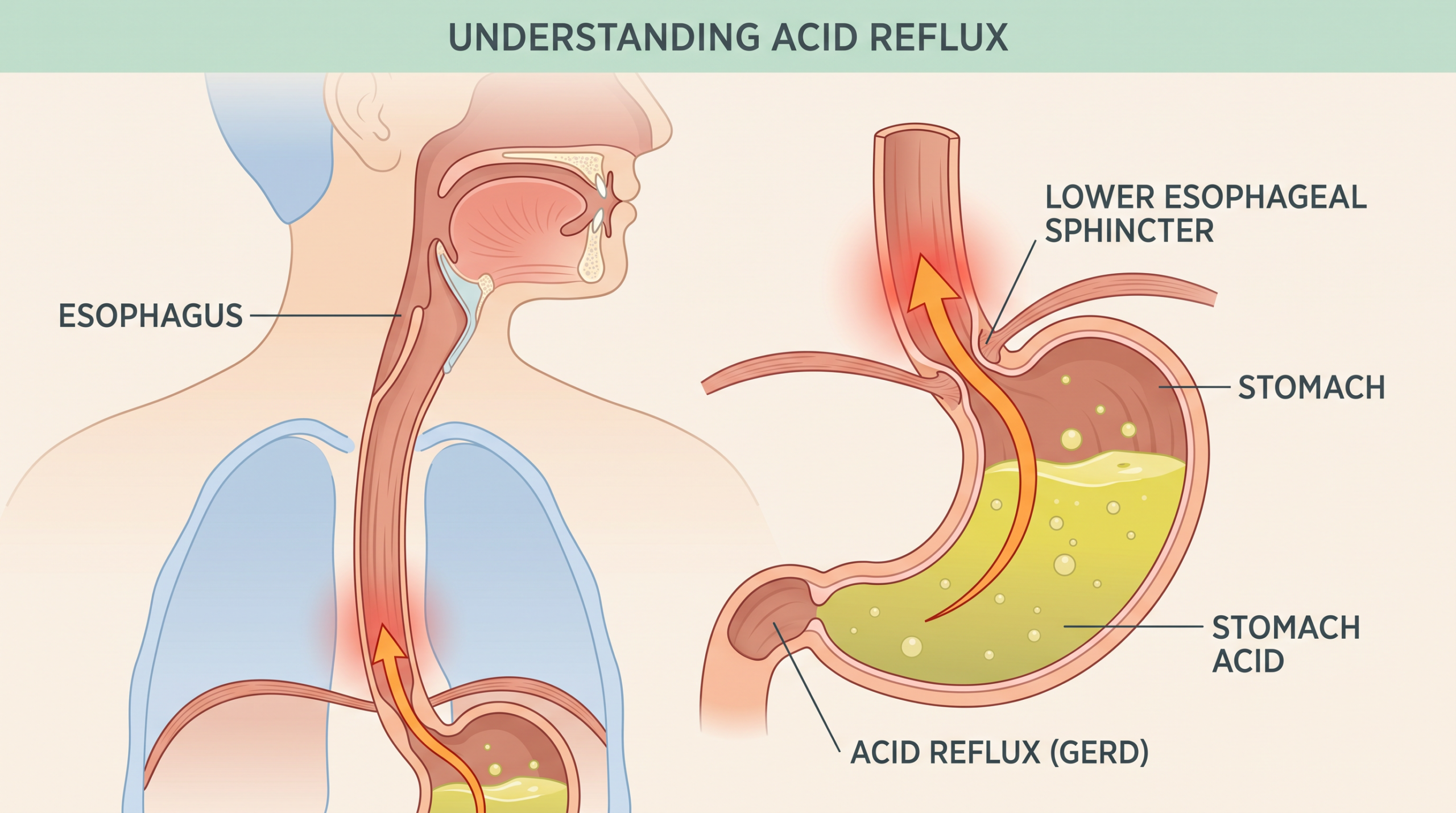
Understanding acid reflux causes and symptoms can help you prepare questions for a healthcare professional. This guide explains common symptoms, possible triggers, and reasons to seek care. It provides general information rather than a personal diagnosis.
What is acid reflux?
Acid reflux happens when stomach contents flow back into the esophagus, the tube connecting your mouth and stomach. However, occasional reflux and gastroesophageal reflux disease (GERD) are not the same. A healthcare professional can assess persistent symptoms and explain whether further evaluation is needed.
Acid reflux causes and symptoms
Reflux can occur when the muscle at the bottom of the esophagus becomes weak or relaxes at the wrong time. Pregnancy, smoking, excess weight, and a hiatal hernia may increase the risk. In addition, some medicines can contribute to symptoms.
Heartburn and regurgitation are common symptoms. Heartburn feels like burning behind the breastbone, while regurgitation brings stomach contents into the throat or mouth. However, some people experience nausea, a chronic cough, hoarseness, or swallowing problems instead. For details, read the NIDDK guide to reflux symptoms and causes.
Food triggers for acid reflux symptoms
Food triggers vary between people. For example, coffee, alcohol, chocolate, mint, spicy foods, acidic foods, and high-fat meals may worsen symptoms for some readers. Therefore, avoid assuming that everyone needs the same restrictions.
If symptoms happen at night, NIDDK notes that eating at least three hours before lying down may help. Discuss your eating habits and suspected triggers with a healthcare professional. The NIDDK diet and nutrition guide explains these considerations.
When to seek medical advice
Contact a healthcare professional if symptoms persist or do not improve with usual measures. Also seek care for painful or difficult swallowing, persistent vomiting, unexplained weight loss, or signs of bleeding. Chest pain needs medical assessment; do not assume that it is reflux.
About this information
We are not doctors. This website provides general educational information and is not a substitute for professional diagnosis or treatment. Use the linked sources to learn more, and consult a qualified healthcare professional about your symptoms and treatment options.
Leave a Reply